If you use the WhatsApp Business API to talk to your customers, send order updates, or run marketing campaigns, heads up! Meta is rolling out a major update to its pricing model starting October 1, 2026.
I know hearing the word "pricing update" usually makes people worry about higher bills. But don't stress just yet. Depending on how you use WhatsApp for your business, these changes might actually work out in your favor—or give you a good reason to clean up your messaging strategy.
Let’s break down what is happening, why Meta is doing it, and what you should do to prepare—in simple, everyday language.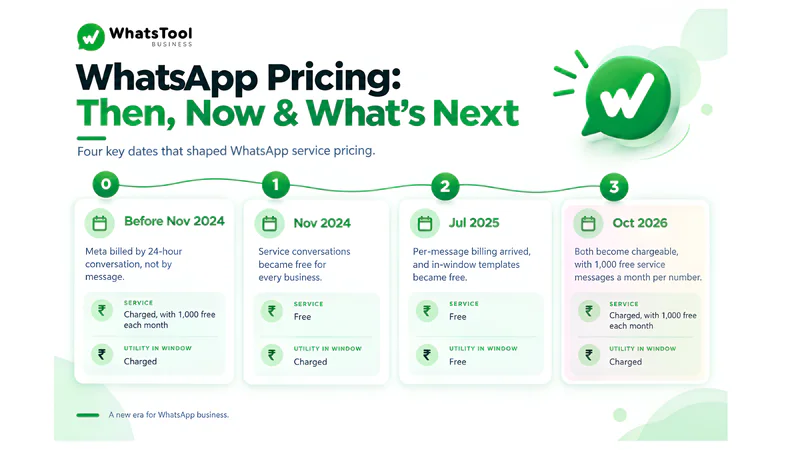
🧩 The Challenge: Why Meta is Changing the Rules
Over the past few years, WhatsApp has become the main channel for business communication. However, two big issues emerged:
Spam & Message Overload: Users started getting flooded with constant promotional messages.
Unfair Costs for Quick Alerts: Businesses sending a simple 2-second OTP or delivery update had to pay for a full 24-hour conversation block, which didn't make financial sense.
Meta’s goal with this update is simple: reduce spam for users while making transactional notifications cheaper and more logical for businesses.
⚙️ The Solution: Per-Message Pricing Explained
Right now, WhatsApp charges you based on 24-hour conversation windows. When you message a customer, a 24-hour timer starts, allowing multiple messages within that category for one fee.
Starting October 1, 2026, Meta is shifting away from 24-hour blocks to a per-message pricing model for utility and marketing messages.
Here is a quick breakdown of how different message types will be affected:
Utility Messages (OTPs, Order Tracking, Account Alerts): Instead of paying for an entire 24-hour window, you will now be charged per individual message sent. If you send a quick password reset code, you only pay for that single message.
Marketing Messages (Promotions, Discounts, Product Drops): These will also move to a per-message charge. This discourages businesses from blasting massive, multi-message sequences endlessly during an open window.
Service Messages (Customer Support): When a customer reaches out to you first, the customer support model remains highly cost-effective so you can resolve queries without extra stress.

🎯 What This Means for Your Business
Will your monthly bill go up or down? It depends on how you use the platform today:
Your bill will likely GO DOWN if: You primarily send single transactional alerts like payment confirmations, delivery tracking, or login verification codes.
Your bill might GO UP if: You rely heavily on long, back-and-forth promotional blasts where you push 4 to 5 marketing messages to a single contact in a short time.
🧠 Strategic Steps to Prepare Right Now
October 2026 might feel far away, but preparing early will save your business a lot of money and effort down the line.
Audit Your Current Workflows: Review your messaging sequences. Start tightening your campaigns to focus on high-impact single messages rather than multi-message follow-ups.
Segment Your Audience: Stop broadcasting promotions to your entire contact list. Group users by interest and purchasing behavior so you only pay to reach high-intent buyers.
Optimize Your Templates: Re-categorize non-essential notifications into utility templates to keep your delivery costs as low as possible.
Encourage Customer-Initiated Support: Use website widgets or click-to-WhatsApp ads so customers reach out to you first, keeping support conversations affordable.
Watch our full video for tips and tricks to lower your WhatsApp broadcast costs.
✅ Conclusion
🎯 Final Thoughts: What Should Be Your Strategy Now?
While pricing updates can feel overwhelming at first, this shift actually pushes all of us toward building cleaner, more respectful, and highly relevant conversations. Less spam means higher open rates, better customer trust, and higher conversion rates for legitimate businesses.
Quick Recap of India Pricing Impact (Effective October 1, 2026):
1,000 Free Service Messages: Every WhatsApp Business account gets 1,000 free service messages each month per phone number.
Per-Message Billing: Post the free quota, service replies and utility messages inside the 24-hour window will cost ₹0.13 per delivered message (depending on the exact category rate).
Focus on Efficiency: Incoming customer messages remain 100% free. The goal now is simple—resolve queries faster in fewer, high-value messages instead of sending multiple unnecessary replies.
Moving forward, the key to keeping your messaging bill low is smart automation, audience segmentation, and choosing a platform with zero extra markups.
👉 Want to keep your WhatsApp marketing budget predictable?
Check out our transparent and affordable plans on the WhatsTool Business Pricing page to see how you can scale your customer chats without paying hidden per-message markups!
Need help auditing your WhatsApp setup before the new rules kick in? Reply to this post or contact our team—we are happy to help you optimize your messaging flows for maximum ROI!