Many people think WhatsApp Business API is only for big companies. They believe it is too costly, too technical, and not meant for a small shop.
This case study shows the opposite. It is the story of a kids wear shop owner who used WhatsApp API to talk to his old customers and clear last year's stock.
Quick Summary
- Business: A small kids wear and clothing shop
- Problem: Last year's stock was not selling
- Solution: A targeted WhatsApp broadcast with automatic follow-ups
- Result: Old customers came back, and the old stock was cleared during the festival season
Meet the Shop Owner
He runs a small kids wear shop. Like many shop owners, he had one big headache. Last year's stock was still lying in the shop. New stock was coming in, and the space was running out.
He did not have a big marketing team or a big budget. What he had was a shop, a loyal group of customers, and a simple idea.

The Problem: Old Stock and No Easy Way to Reach Customers
Every shop owner knows this feeling. You buy stock with hope. Some of it sells fast. Some of it just sits on the shelf for months.
Dead stock is a real problem for small shops. Your money is stuck in clothes that are not moving. Your shelves are full, so you cannot bring in fresh designs. And every week the stock gets older and harder to sell.
He had a few options:
- Wait for customers to walk in
- Put up a sale board outside the shop
- Message people one by one on WhatsApp
Why Messaging One by One Does Not Work
None of these options worked well. Waiting was slow. A sale board only reached the people passing by the shop. And messaging hundreds of customers one by one could take days. On the normal WhatsApp app, he also could not send the same message to a large group of people at once.
But his shop had one big strength. He already had hundreds of old customers who had bought from him before. He just had no easy way to talk to them.
The Solution: WhatsApp API
He started using WhatsApp Business API with WhatsTool Business.
The normal WhatsApp app is made for personal chats. The API is made for businesses. It lets a business send messages to many customers at the same time, in an official and safe way. It also helps with automatic replies and follow-ups, so the shop owner does not have to answer the same question again and again.
He did not need to be a tech expert. He simply followed four steps:
1. Collected his old customer list. These were people who had shared their number and agreed to get messages.
2. Created a simple offer message about his old stock.
3. Sent it to all customers at once using a targeted broadcast.
4. Used automatic follow-ups to reply to people who showed interest.

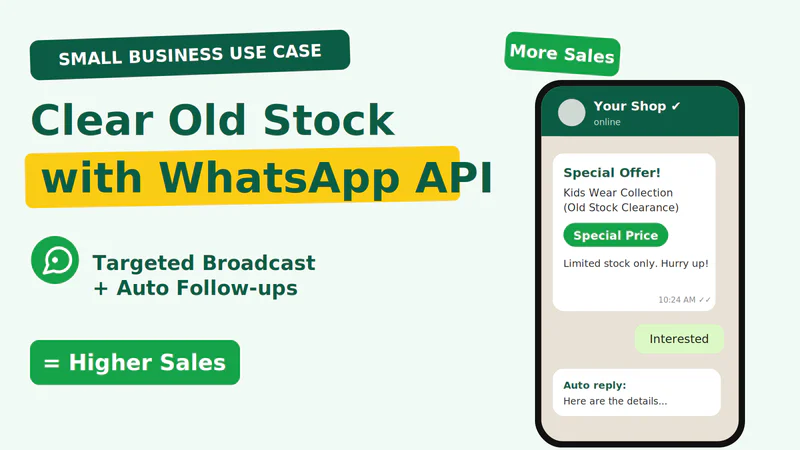
What the Message Looked Like
The message was short and clear. Nobody likes to read a long message on WhatsApp, so he kept it simple. It had:
- A friendly greeting
- The offer, for example "Old stock clearance, special price"
- A note that the stock is limited
- A simple reply option like "Interested"
When a customer replied "Interested", the next message went out automatically with more details. He did not have to type the same thing again and again. Customers got quick answers, and he saved a lot of time.

The Result
The results came quickly. In his own words, he sent messages to many customers together, and his old customers came back to the shop. Because of this, last year's stock was cleared during the festival season.
He also noticed something important. These were not new customers. They were people who already knew and trusted his shop. They only needed a reminder that he was still there, and that he had a good offer for them.
Why This Worked
Let us keep it simple. This idea worked because of four things:
- Old customers already trust you. It is much easier to sell to someone who has bought from you before than to find a new customer.
- People read WhatsApp. Most people check WhatsApp many times a day, much more than email.
- The timing was right. Festival season is when people are already in a shopping mood.
- Follow-ups were automatic. No interested customer was missed, even when the shop was busy.
In short, he did not chase new customers. He simply started a conversation with the customers he already had.
What You Can Learn From This Case Study
You do not need a big business or a big budget. If you have a customer list, you can try the same idea. It works well for:
- Clothing and kids wear shops
- Kirana and grocery stores
- Electronics and mobile shops
- Jewellery and gift shops
- Salons, coaching centres, and clinics
Start small. Pick one product or one offer, send it to your old customers, and see how they respond. You can read more such type of real case study.
Important: Always Take Permission
Only message people who have agreed to receive messages from you. This keeps your WhatsApp number safe and your customers happy. Sending messages to people who did not ask for them can get your number blocked. Good business on WhatsApp always starts with permission.
Watch the Full Story
Want to hear it from the shop owner himself? Watch his full experience in the video below.
Want to Try This in Your Business?

WhatsTool Businessis an official Meta Business Partner. We help small and big businesses use WhatsApp API for sales, support, and marketing.